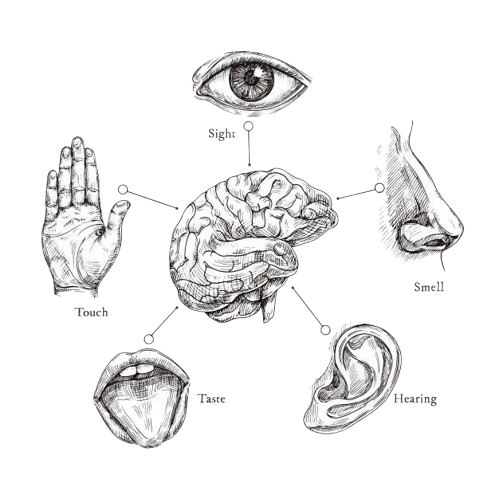
When we experience something with several senses at the same time the memory formed after this experience will be stronger. For example, if one day, I speak to someone for the first time while listening to a song, I may remember him or her the next time I listen to this same song. Our brain associate senses and memories, actually, the senses are our sensors, the front door of any experience that will lead to a memory. Our senses are capable to revive emotions, places and moments with high intensity.
The smell is directly linked with the limbic system, which is a zone of our brain where emotions and memory are managed. When a familiar smell is perceived, it can reactivate extremely precise memories, often linked to childhood.
Sight and memory are deeply interlinked. Approximately 80% of what we remember begins with a visual impression. When we encounter a scene, our brain doesn't just record a static image; it encodes spatial colors and details into a memory. This process relies on the hippocampus, which works with the visual cortex. The more clear and distinct a visual experience is, the stronger the resulting memory becomes. Conversely, when visual input is missing or degraded, the brain struggles to form new memories, often relying on imagination to fill the gaps. .
The different sound we can hear, and particularly the music can stimulate a huge brain network, including the medial prefrontal cortex, which is a brain zone involved into identity and emotions. That's why, when we listen to a song we listened in childhood, we can more easily remember the context : the people we were with, what we were feeling... And with some old people, even if they're suffuring from memory disorders a music can revive forgotten memories.
Taste plays an important role in memory formation due to its direct anatomical connection with the limbic system, the brain's center for emotion and memory. Sight or hearing pass through the thalamus before processing, but taste signals travel directly to the amygdala and hippocampus. This explains why a single taste of candy or the flavor of a certain chocolate can instantly and with intensity trigger a childhood memory or a specific past moment. This phenomenon, is often called the "Proustian effect". This effect links a flavor to a precise emotional context, making these memories particularly resilient and vivid over time.
Touch has a profound and often underestimated influence on memory and the formation of long-term memories. It operates through a complex network of nerve endings that transmit physical sensations directly to the brain's somatosensory cortex and limbic system. Tactile memories are frequently more emotional, rooted in the physical sensations of comfort, safety, pain, or intimacy experienced during critical developmental stages. The brain encodes these touch-experiences with fidelity because they are often associated with immediate physiological responses and emotional regulation, making them less susceptible to distortions that other sensory memories. For instance, the memory of a parent's embrace or the texture of a beloved object can evoke a deep sense of security or nostalgia. This unique relationship suggests that our physical interactions with the world leave an important imprint in ways that words or images alone cannot replicate.